When a Water-Stained Ceiling Is More Than Just a Stain
A water stain on your ceiling might look harmless at first, but it is often the first warning sign of something bigger. The kind of bigger that leads to hidden moisture, fast-spreading mold, damaged drywall, and expensive repairs if you wait too long. If you are in Utah County or Salt Lake County and you have spotted a new stain or discoloration, you are not alone. It is one of the most common issues homeowners call us about, and it often starts with a small patch that becomes a much larger problem.
This guide walks you through what the stain means, how fast mold can develop, what steps you should take right now, and when it is time to bring in help. By the end of this page, you will know how to protect your home and prevent a simple stain from turning into a major headache.
Quick Guide:
- What a Water-Stained Ceiling Really Means
- Why Moisture Turns Into Mold So Quickly
- How to Diagnose the Source of the Leak
- What You Can Do Right Now
- When to Call a Professional
- What Our Team Sees Every Day
- FAQs
- Final Thoughts
What a Water-Stained Ceiling Really Means
Here is the thing. A water-stained ceiling is not just cosmetic. It is a signal that something above that stain allowed water or moisture to escape into building materials that should always stay dry. When ceiling materials get wet, they rarely dry quickly without help. Trapped moisture creates perfect conditions for mold to grow.
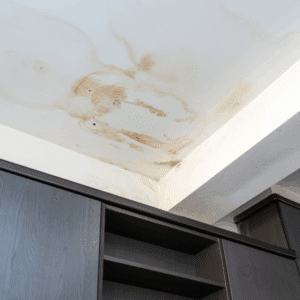
A stain usually means one of the following:
- A leaky roof
- A broken or sweating pipe
- An overflowing bathtub or shower above the stain
- HVAC condensation or an AC line leak
- Ice damming that pushed meltwater into the attic
- Poor attic ventilation created humidity buildup
Many Utah homes face these problems year-round. Snowmelt, temperature swings, heavy rain, and aging plumbing can quietly push moisture into ceilings. By the time you see the stain, the problem has often been active for a while.
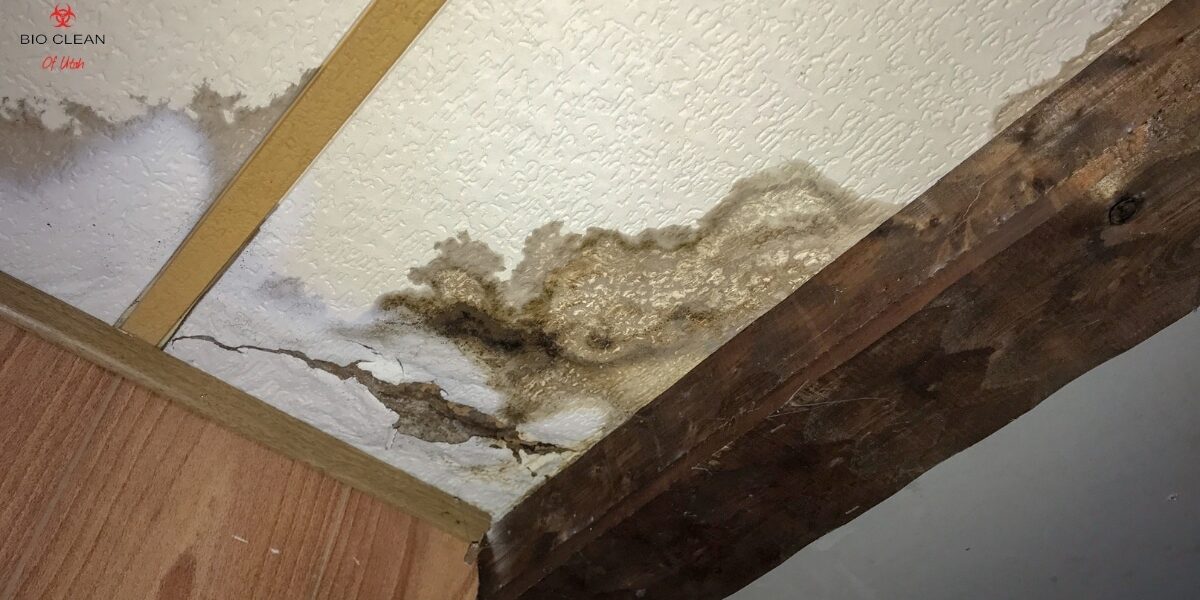
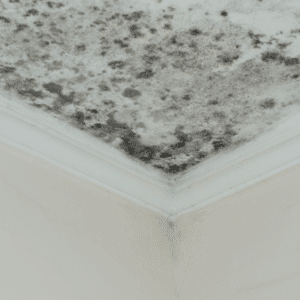
If the stain looks yellow, brown, or ring-shaped, that is classic water intrusion. If you notice a musty odor or the area feels soft when you lightly press around it, mold may already be forming behind the drywall.
Why Moisture Turns Into Mold So Quickly
Water intrusion and mold are closely connected. Mold does not take weeks to appear. Once moisture reaches drywall, wood, or insulation, mold spores can germinate within 24 to 48 hours. This is why waiting even a short amount of time can shift the situation from a simple fix to full remediation.
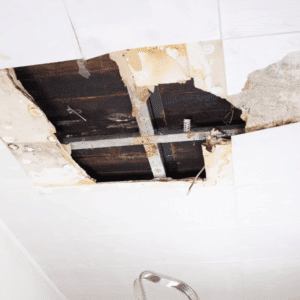
Here is what happens behind the stain:
- Drywall absorbs water quickly and holds it in the core
- Insulation traps moisture and blocks airflow
- Warm indoor temperatures in Utah create perfect conditions for mold to grow
- Hidden leaks continue feeding the problem without your knowledge
This is not about fear. It is about basic building science. Mold only needs moisture, organic material, and the right temperature. A damp ceiling gives it everything it needs.
If you see discoloration spreading, paint bubbling, or the stain becoming darker, you are moving into the mold-growth zone. Once mold takes hold, cleanup becomes more complex because it spreads into hidden cavities.
How to Diagnose the Source of the Leak
Before anything can be fixed, you need to know where the water is coming from. The stain might not sit directly under the source. Water often travels along beams, trusses, or ductwork before settling into a single spot.
Start with these steps:
- Identify what sits above the stain.It could be a bathroom, kitchen, attic, roof line, or HVAC system.
- Look for obvious signs.You may see dripping water, active wet spots, peeling paint, a sagging ceiling, or a musty odor.
- Consider seasonal clues.Roof leaks appear during storms.Ice damming is common in winter.AC condensation becomes an issue in summer.Cold snaps can stress plumbing.
- Document the damage.Photos help with insurance claims and make it easier for professionals to assess the situation.
A stain that grows quickly or feels soft means moisture is still present. That is the moment to act quickly.
What You Can Do Right Now
You do not need to fix everything today. You do need to stop the damage from getting worse. Here are the steps to take as soon as you notice the stain.
- Stop the water source if possible.Turn off the water supply if you suspect a plumbing leak.
- Protect the area below.Move belongings out of the way.
- Avoid poking or cutting into the ceiling.A waterlogged ceiling can collapse.
- Increase airflow.Fans can help, but they will not fully dry the materials beneath the surface.
- Check nearby rooms and walls.Moisture often spreads sideways before it shows downward.
These steps buy you time and help prevent unnecessary damage.
When to Call a Professional
A water-stained ceiling becomes a mold risk much faster than most people expect. Call a professional if any of the following apply:
- The stain has grown within twenty four to forty eight hours
- You notice mold or a musty smell
- The ceiling is sagging or soft
- You cannot locate the source of the leak
- The stain keeps returning after attempts to dry the area
- The stain is near insulation, HVAC lines, or attic spaces
This means the issue has moved beyond a simple DIY fix. Proper cleanup often requires:
- Moisture detection tools
- Safe removal of wet materials
- Drying and dehumidification equipment
- Mold testing or remediation
- Structural assessment
Painting over the stain will not solve the issue. Setting up a fan will not dry what is inside the ceiling cavity. Professional tools and training are needed to make sure the problem is handled safely and correctly.
What Our Team Sees Every Day
At Bio Clean of Utah, we have helped hundreds of homeowners across Utah County and Salt Lake County with ceiling leaks, water damage, and mold concerns. Most homeowners assume the stain is harmless until they notice an odor or the ceiling starts to sag. By that time, mold has often spread into insulation or wall cavities.
Slow leaks are the most common cause. These leaks might be tiny, but they continue dripping into the same spot for weeks or months. That is why professional inspection is important. Moisture hides behind drywall and grows quietly. Our IICRC-certified team uses specialized tools that detect moisture behind surfaces so we can identify the exact source quickly.
You do not need to know what is behind the stain. You just need someone who can find out.
Need Help Fast? Here is a Light Next Step
If your ceiling stain is spreading, producing an odor, or making you wonder whether mold is involved, you do not have to diagnose the problem on your own.
Our team is available at any time of day. You can request an inspection or get an estimate whenever you are ready. We also work with insurance companies to help reduce the stress that often comes with water damage issues.
In many cases, issues start with ceiling leaks or a broken or sweating pipe and lead to more widespread damage if left alone.
FAQs
Protect Your Home Before a Small Stain Turns Into Something Bigger
A water-stained ceiling is a problem that rewards quick action. The longer moisture sits, the more likely mold is to grow and the harder the repairs become. You can prevent those outcomes by acting early and getting help when needed.
If you are unsure what you are dealing with or the stain is changing, spreading, or producing a musty smell, reach out for support. You can explore our services, learn more about mold prevention, or request an estimate at any time.

- One Disaster, Two Problems: How To Recover From Fire And Water Damage Fast - December 9, 2025
- Water-Stained Ceiling? Act Fast Before It Turns into Mold - December 5, 2025
- Why Mold Remediation and Abatement Are Growing 3% a Year as Utah Families Choose Healthier Homes - December 4, 2025